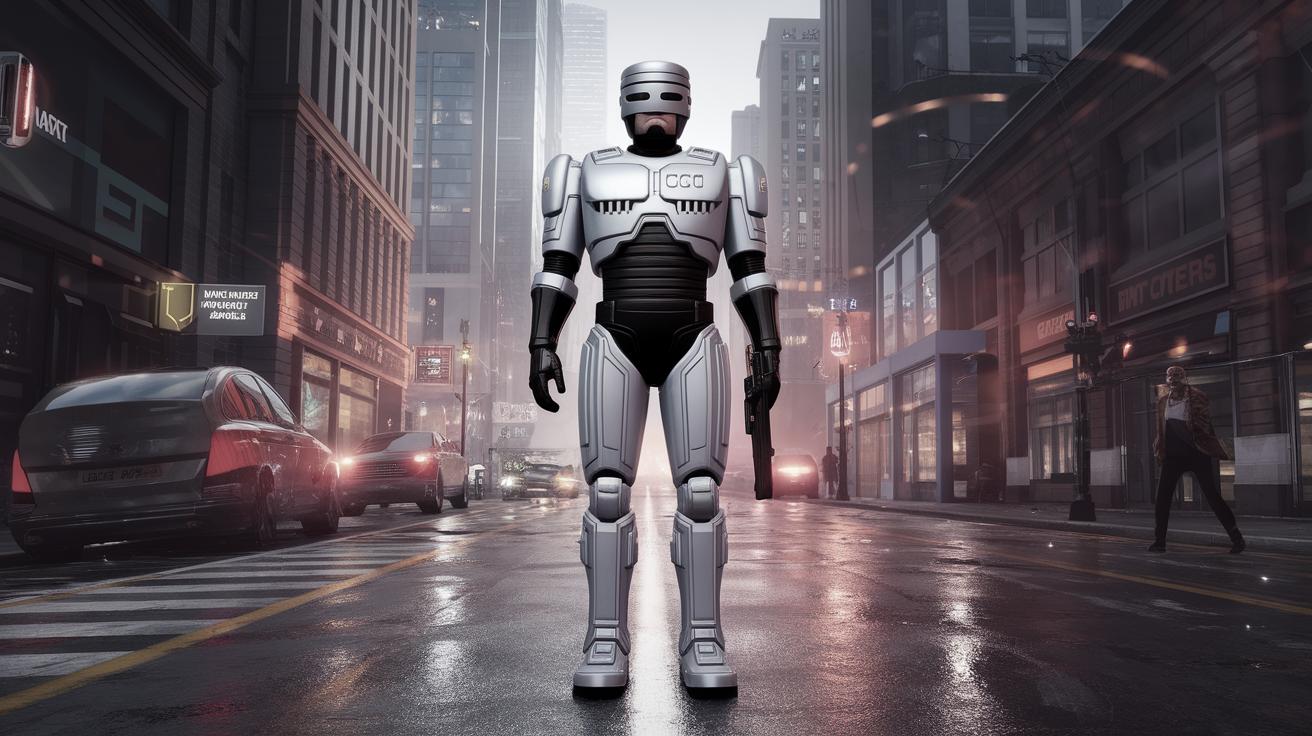
Review – RoboCop: Rogue City
RoboCop: Rogue City has become a focal point of discussion among gamers eager
to immerse themselves in the dystopian world of Detroit’s infamous cybernetic
enforcer. This blog post explores whether the game delivers on its promise of an
open-world experience or if players will find themselves navigating more linear paths.
With the franchise’s cultural impact, expectations are high for innovation coupled with
nostalgia. Through this review, we delve into the mechanics, world-building,
and player freedom to provide a comprehensive understanding of its open-world elements
and how they influence the overall gameplay experience.
Share this:
RoboCop: Rogue City might surprise both longtime fans and newcomers with its approach
to open-world mechanics. The game developers have worked hard to create a world that
feels alive and packed with opportunities for exploration and side missions. Right
from the start, players might feel the urge to uncover Detroit’s secrets beyond the
linear missions directly related to the main narrative. The urban landscapes are filled
with interactive elements that draw the player deeper into the game’s environment.
As a player, you have the freedom to choose your path. This aspect shifts the dynamics
of the gameplay, providing a sense of agency and control. The developers’ decision
to incorporate a more non-linear structure has paved the way for a flexible storytelling
approach. It invites players to immerse themselves in side quests that enhance character
development while subtly supporting the overarching game narrative. These side missions
often offer opportunities to interact with Detroit’s diverse inhabitants, adding layers
to the gameplay.
Like this:
Fans of open-world games will appreciate the numerous world-building elements scattered
throughout the city. Interactive environments allow players to engage with the setting
in a manner that feels authentic and purposeful. The developers have intricately designed
each district to feel unique, balancing futuristic aesthetics with gritty, dystopian undertones,
which stay true to the franchise’s roots.
The open-world design does not solely rely on visual aesthetics. The soundscape, coupled
with a dynamic weather system, plays a crucial role in shaping the ambiance. Every corner
of Detroit tells a story, inviting players to linger and absorb the narrative crafted through
environmental storytelling. These features ensure that players have an active role in unearthing
the city’s storied history.
Check these out!
Engaging with the game means embracing its scope. Players are encouraged to test the boundaries
of the city, thoroughly exploring every nook and developing an understanding of the game’s depth.
The consistent updates and secondary quests contribute significantly to the replayability,
ensuring that every playthrough offers something fresh and engaging.
Community interactions play a crucial role in enhancing the game’s replayability. Players often
discuss strategies, hidden discoveries, and share in-depth analyses of their experiences online.
This shared knowledge creates a vibrant community that supports and perpetuates interest
in RoboCop: Rogue City. As players delve deeper and uncover hidden gems, they collectively
enrich their understanding and appreciation of the game.
Lessons learned:
| Aspect | Details |
|---|---|
| Open-World Mechanics | RoboCop: Rogue City excels with its immersive open-world elements, providing players with freedom to explore. |
| World-Building | The game’s environment is detailed and interactive, encouraging exploration and engagement with the setting. |
| Community Engagement | Online discussions and shared strategies enhance the game’s replayability and community interaction. |